.png?width=165&height=66&name=Untitled%20design%20(9).png "Untitled design (9)")
Manufacture Equity (via Renovations)
What it is:
Manufacturing equity through renovation means deliberately increasing a property’s value — and often its rental return — by making strategic, cost-effective improvements. You’re forcing value, rather than waiting solely for market growth.
Why it matters:
Unlike passive growth, manufactured equity can be realised in months, not years. This can accelerate portfolio growth by allowing you to refinance or sell at a higher value sooner.
Who it suits:
- Investors wanting to “add value” rather than rely on market conditions
- Hands-on or project-managing investors comfortable with timelines and budgets
- Those with access to funds or finance for improvements
- Investors seeking better rental yields and stronger tenant appeal
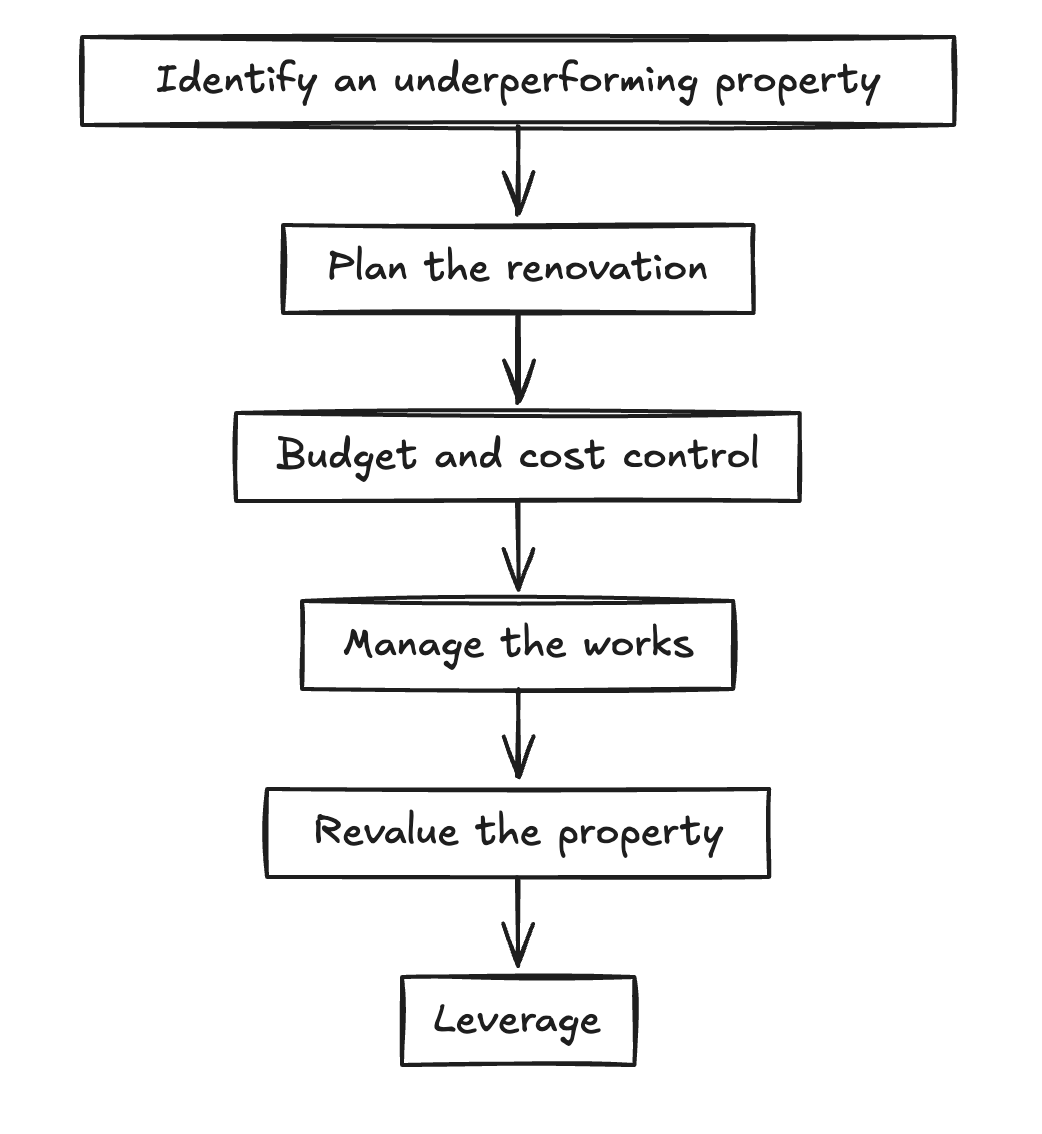
- Identify an underperforming property — Look for cosmetic or structural potential below market value.
- Plan the renovation — Target high-ROI upgrades (kitchens, bathrooms, layouts, street appeal).
- Budget and cost control — Allow contingency and stick to scope.
- Manage the works — Either hands-on or with a builder/project manager.
- Revalue the property — After completion, to measure equity gain.
- Leverage — Refinance to release equity or improve cash flow with higher rent.
- Fast equity creation – Value uplift within months.
- Improved cash flow – Higher rent from upgraded property.
- Better tenant profile – Attract quality, long-term tenants.
- Increased depreciation benefits – Especially on new fixtures and fittings.
- Portfolio acceleration – Use released equity for the next purchase.
- Dual housing outgoings. You’ll carry rent + investment holding costs. A tight household budget or variable income can make this stressful without a buffer.
- Vacancy and maintenance risk. If the investment sits vacant or needs repairs, cash flow takes a hit. Budget for 2–4 weeks vacancy and a realistic upkeep allowance.
- Interest‑rate sensitivity. Investment loans can be pricier than owner‑occupier loans. Stress‑test at higher rates and consider buffers or fixed periods.
- Missed first‑home incentives. Buying an investment first often means no first‑home stamp duty concessions or grants on that purchase.
- Capital gains tax (CGT). Your investment isn’t your main residence; if you sell at a profit, CGT may apply (seek tax advice).
- Borrowing capacity interplay. Your rent is an expense; expected rent from the investment counts as income (usually “shaded”). Work with a broker early.
- Emotional fit. Some people value the pride and permanence of owning their residence. If that’s you, set a defined horizon for rentvesting and revisit.
Mitigate by modelling conservative scenarios, maintaining buffers, and choosing fundamentally sound locations and property types.
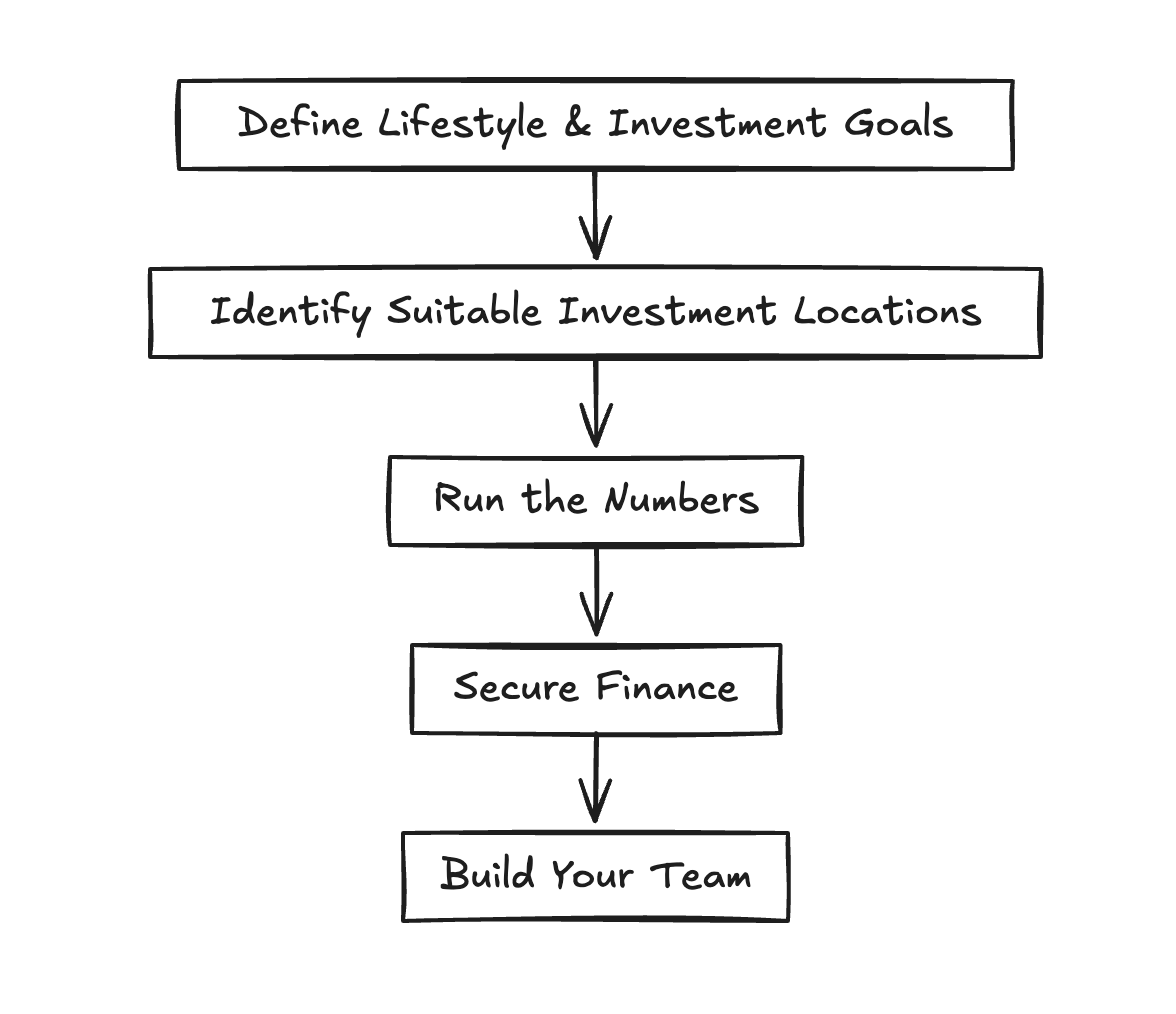
A) Define Lifestyle & Investment Goals
- Lifestyle non‑negotiables: Commute, school zones, space, community—write these down.
- Investment objective: Prioritise growth, yield, or a balance. This drives location and dwelling type.
- Risk appetite & horizon: How many years can you rentvest comfortably? What cash shortfall can you carry per month if rates rise?
B) Identify Suitable Investment Locations
- Demand signals: Vacancy rate under ~2%, days on market stable or falling, consistent rental enquiries.
- Growth scaffolding: Population inflows, infrastructure (transport, health, education), diverse employment bases.
- Price points: Align with borrowing power and cash‑flow tolerance; avoid over‑stretching for a “wish list” suburb.
- Dwelling fit:
- Houses (often better land content and long‑term growth, possibly lower yield).
- Townhouses/villas (balanced land component, often steady tenant demand).
- Units (sometimes higher yield, but watch strata fees and oversupply).
- Shortlist 3–5 suburbs and compare on a one‑page matrix: price, rent, yield, vacancy, major projects, and tenant profile.
C) Run the Numbers
- Upfronts: Deposit, stamp duty, legal, building/pest, inspections, moving, contingency.
- Ongoing: Mortgage interest (stress‑tested), management, insurance, rates, strata (if applicable), routine maintenance, allowance for vacancy.
- Cash‑flow profile: Model base, bear, and bull cases. Identify monthly cash shortfall or surplus after tax (accountant can help).
- Yield guides:
- Balanced resi strategies often target 4.5–5.5% gross yield.
- If you need close‑to‑neutral cash flow, target the upper end and negotiate price firmly.
- Sensitivity: Re‑run with rates +1.5% and rent –5%. If that breaks your budget, resize the deal.
D) Secure Finance
- Broker first. Discuss rentvesting specifically (rent expense vs shaded rental income).
- Structure: Interest‑only for early cash flow vs P&I for steady debt reduction; offset account for buffers; consider debt recycling paths with your adviser.
- LVR & LMI: 80% LVR avoids LMI; 90–95% may be workable but increases costs and risk—model carefully.
- Pre‑approval: Lock it in before you start making offers so you can move decisively.
E) Build Your Team
- Buyer’s agent (optional but powerful if buying interstate): brief, source, appraise, negotiate.
- Conveyancer/solicitor: Contract reviews, searches, settlement.
- Building & pest inspector: Non‑negotiable for houses; strata records check for units/townhouses.
- Property manager: Tenant selection, rent reviews, arrears, maintenance. Interview 2–3 and compare fee inclusions.
- Accountant: Structure, deductions, and record‑keeping; set you up for tax‑time efficiency.
Profile: 31‑year‑old professional couple renting in Sydney’s inner west for $900/week. Combined gross income $230k. Savings $160k. They’re not ready to buy locally but want to start investing.
Investment brief: Neutral‑to‑slightly‑negative cash flow acceptable; target house or townhouse in an affordable metro corridor with 4.8–5.3% gross yield and tight vacancies.
Target market: SE QLD metro fringe.
- Typical purchase: $580,000 townhouse, expected rent $560/week (≈ 5.0% gross).
- Upfronts: stamp duty, legal, B&P, setup ≈ $25k–$28k (state‑dependent).
- Funding: 80% LVR loan ($464k) at illustrative 6.25% P&I (or IO by strategy).
- Monthly mortgage (P&I 30 yrs): ≈ $2,860.
- Rent monthly: ≈ $2,427.
- Other monthlies (averaged): management $150, insurance $70, rates/strata/allowances $330.
- Indicative cash flow: Shortfall ≈ $983/month pre‑tax (improves with tax deductibility; confirm with accountant).
- Buffer: They maintain 6 months of holding costs in an offset.
Why it works for them: They keep the inner‑west lifestyle (renting), begin equity growth in a market that fits their numbers, and retain agility to refinance for a second purchase in 24–36 months if performance meets expectations.
(All figures illustrative—run your own modelling and seek advice.)
- Deal Calculator (Spreadsheet). Inputs: price, deposit, rate, rent, fees, vacancy, maintenance, tax rate → outputs monthly cash flow and 10‑year projections.
- Suburb Comparison Matrix. A one‑pager to rank suburbs on yield, vacancy, price growth, days on market, tenant profile, and infrastructure.
- Cash‑Flow Playbook. A checklist to identify quick wins post‑settlement: rent review cadence, insurance settings, maintenance plan, and offset discipline.
- Finance Prep Pack. Broker‑ready pack: payslips, tax returns, living‑expenses summary, liabilities list, and a 12‑month savings history.
- Inspection & DD Checklist. Contract review, B&P scope, strata records, council overlays, flood/fire maps, and local vacancy scan.
Background: “Sam,” 29, product manager, moved from Perth to Melbourne. Loved living in Fitzroy, but buying there wasn’t realistic. Monthly rent $2,200. Savings $95k. Stable income.
Approach: Sam rentvested into a Brisbane house on a mid‑sized block near a rail corridor. Purchase $520k, rent $520/week (5.2% gross). IO loan first three years to keep cash flow light; offset built to three months of expenses. A local property manager ran tenant selection, routine inspections, and rent reviews.
Outcomes after 3.5 years:
- Modest renovations ($12k) lifted rent to $560/week.
- Market growth + debt reduction created usable equity (~$110k accessible at 80% LVR).
- Sam kept renting in Fitzroy for career and lifestyle reasons, then used the equity to purchase a second investment in Adelaide (unit in small block with strong rental demand).
- Learnings: screening property managers matters; vacancy allowance avoided stress; renovating to the local tenant brief improved both rent and tenant quality.
Takeaway: Separating lifestyle and investment decisions let Sam compound sooner without sacrificing daily life.
Is rentvesting only for first‑home buyers?
No. It suits anyone who values flexibility and wants assets chosen for performance rather than commute. It’s common among professionals, families between life stages, and expats.
Can I move into my investment later?
Yes. Expect tax and lending implications to change (e.g., deductions reduce, loan may convert to owner‑occupier pricing). Coordinate with your accountant and lender before switching.
What deposit do I need?
Common ranges are 10–20% plus costs. At ≥80% LVR you avoid LMI; at higher LVR you may pay LMI—model cash flow carefully either way and consider buffers.
How do lenders treat my rent and the property’s rent?
Your personal rent counts as an expense. Lenders typically include a shaded portion of the expected rental income as income for serviceability. A broker can model this precisely.
What if interest rates rise or the property sits vacant?
That’s what buffers and scenario testing are for. Model rates +1.5%, assume 2–4 weeks vacancy, and hold 3–6 months of expenses in offset. If the deal only works in a perfect scenario, resize it.
- Write your brief. Lifestyle non‑negotiables + investment objective (growth, yield, balance).
- Shortlist markets. 3–5 suburbs with yield, vacancy, and growth drivers you can defend.
- Model conservatively. Base/bear/bull cash‑flow scenarios; set a minimum buffer.
- Get pre‑approval. Engage a broker and prepare a clean finance pack.
- Assemble your team. Buyer’s agent (optional), conveyancer, inspector, property manager, accountant.
- Run due diligence. Contract review, inspections, strata or council checks, rental appraisal.
- Execute, then review. Lease quickly, track KPIs quarterly, and reassess annually.